
Charles
Drag queen Vera Springveer remembered

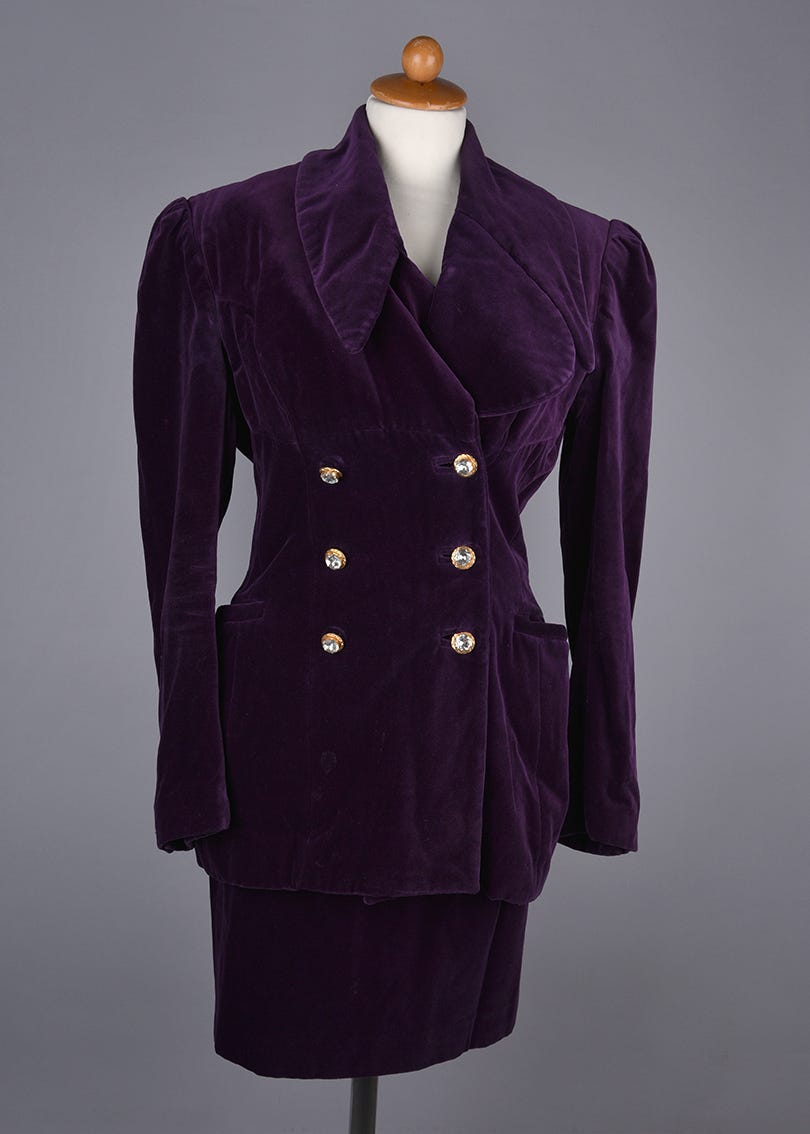
After 120 T-shirts, Gerrit takes a box of drag queen garments. He takes out a deep purple suit. I'm not much into clothes, but this is beautiful, handmade, with great attention to detail. Could the wearer have made it himself? I look at my list. T0308: 'Purple suit Vera Springveer, two pieces'. It will not fit the standard mannequins we use for the photography project. We use the third mannequin, XS size, which we keep on hand for narrow hips.
The pop-up photo studio is set up in a small open space in a packed, windowless warehouse in the catacombs of the Amsterdam Public Library (OBA). We take pictures of a part of IHLIA's large collection of clothing.
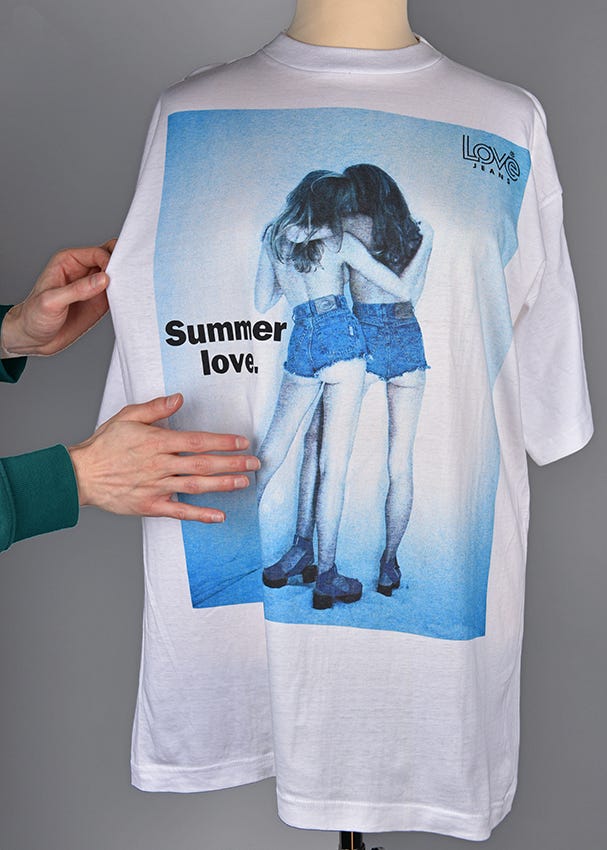
IHLIA archivist Gerrit takes a T-shirt from one of the flat boxes and hangs it on a mannequin. I place the doll in front of the camera, find the number of the T-shirt on my list, turn off the work light, flash the photo, click the work light back on and write down the photo number next to the object. I place the mannequin back to Gerrit, who has already dressed the second mannequin, and he undresses the first one again.
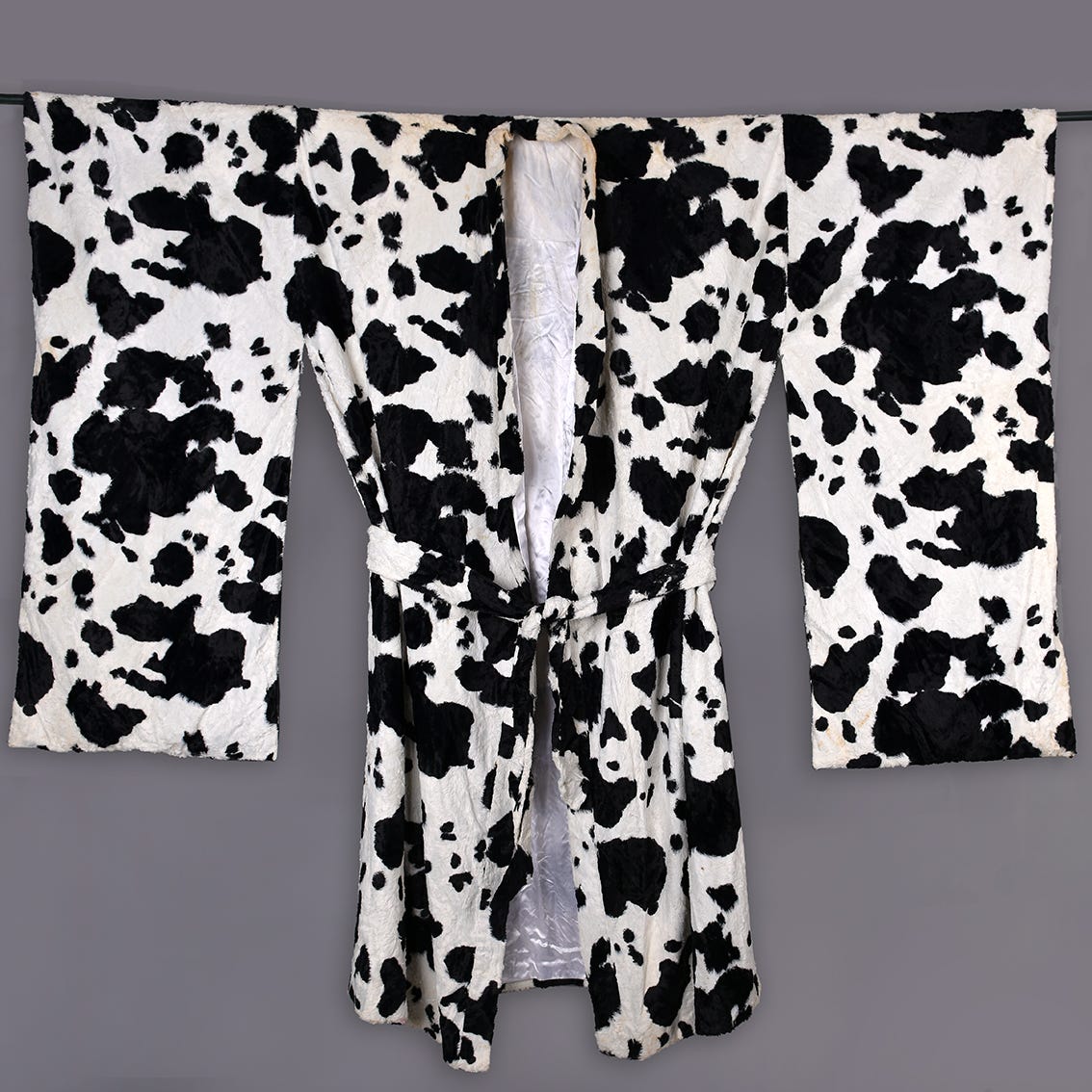
The arrival of drag queen clothing disrupts the routine. Not just because it takes more time to dress the mannequins but because these garments are unique. After the purple suit and a witty tight suit in army camouflage colours, we come to object T0310: 'Two-piece cow outfit Vera Springveer'. The oversized coat, it turns out, is a kimono, and it hangs on the mannequin like a black-and-white trash bag. This kimono needs to be photographed differently. We agree I will take the kimono home to photograph it as one does with kimonos.
Back home, I still need to work on the images I took already, but I don't. Instead, I google Vera Springveer, the alter ego of Charles Lücker, performer, singer and drag queen. And as I thought: narrow in the hips and long. I find some videos on YouTube. At one of them – the premiere of a theatre show in the auditorium of Westgaarde cemetery – I recognize the purple suit. And then there's filmmaker Eddi Bal's extraordinary documentary, Charles. It has English subtitles. Highly recommended.
Eddi Bal's film is about a man - Charles ('Charlie') Lücker - who has created a most powerful alter ego: Vera Springveer*, world-famous in Amsterdam. But Charles wants to move on. He wants to perform under his own name, in men's clothes, covering David Bowie songs. And sing his own songs, not just covers. He starts recording his own raw songs.
There is a beautiful scene where Charlie and the band sit backstage before a performance. Charlie carefully cuts the hair of one of the band members. He is good at it, just like he is good at cooking. I now know that he went to the fashion academy after high school. I don't know if he completed that training, but it does confirm his love for beautiful clothes. I bet he sowed them himself. Backstage, a band member asks: "Where has Vera gone, by the way?" "Ritually burned in the woods," Charlie says lightly.
He dreams of a career as a singer/songwriter with his regular band. He would have succeeded. Unfortunately, it doesn't get that far. Charles Lücker died in 2008 at the age of 43 from the effects of AIDS.
As I photograph the cow kimono, I find a crumpled belt with a cow motif in one of the sleeves. There are remnants of make-up on the kimono itself, especially on the collar, as a witness to Vera/Charle's life and existence.
After Charles' death, Vera Springveer was the one that people wrote about. When it came to fame, she beat him to it. I look up Vera Springveer’s name on my IHLIA Objects List and add: 'pseudonym of Charles Lücker. Singer, performer, and artist.'
‘Springveer’ is as ‘Springcoil’ in English.